Richmond Hill's Saturday Mornings Are Still Running on Henry Ford's Playbook
August 13, 2026
August 13, 2026
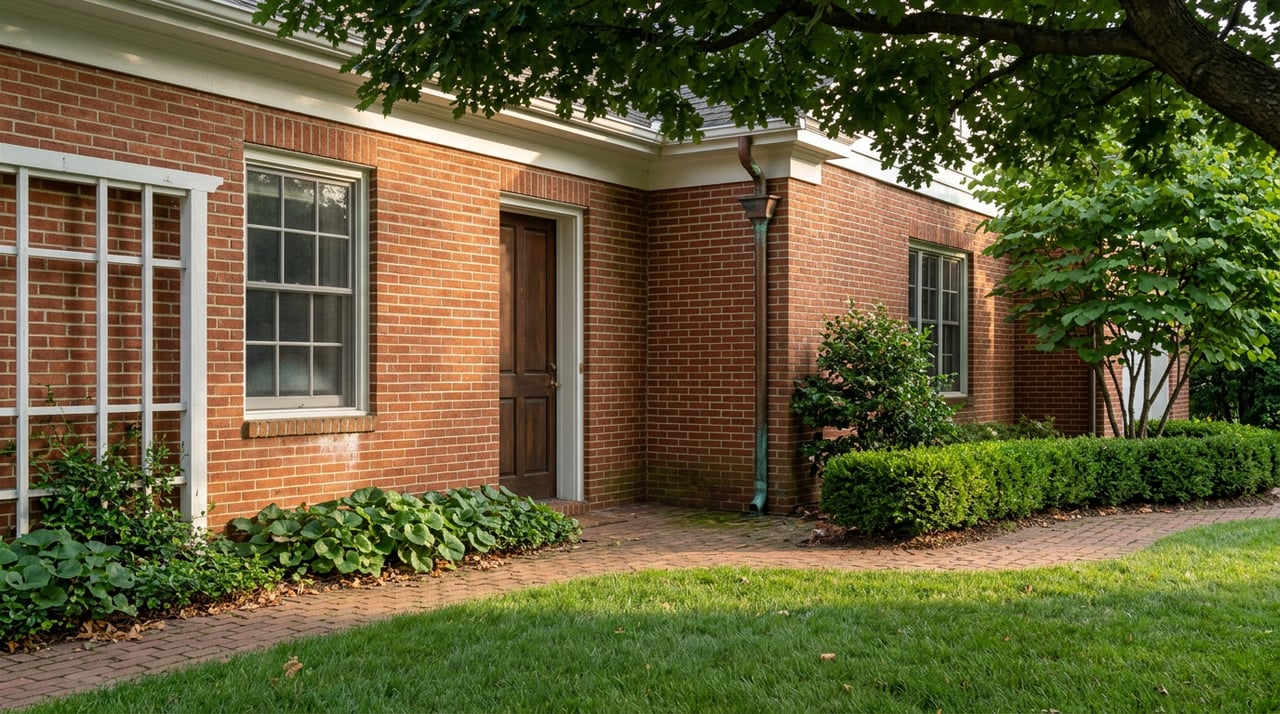
On the first Saturday of the month, from March through October, the lawn outside the Richmond Hill History Museum fills with hot rods before nine. Owners set up folding chairs next to open hoods and swap stories with whoever stops to look. The building behind them is a low white clapboard structure with a wide porch, and it looks more like a schoolhouse than a museum because that's exactly what it was.
That's the first clue to something Richmond Hill residents live with every weekend without quite naming it: the free, well-kept places where the town actually gathers were not built by the town. They were built by one man in a fifteen-year stretch a hundred years ago, and the habit he started never really stopped.
In April 1925, Henry Ford and his wife Clara arrived on the Georgia coast and began buying land, eventually acquiring around 85,000 acres in what was then a small crossroads community called Ways Station. Ford poured money into education, healthcare, and skilled trades, and one of the buildings that came out of that investment was a kindergarten, built in 1937 with a kitchen and two classrooms for children ages three to six, with Dr. Margaret Mustin hired as its first director.
That building is now the Richmond Hill History Museum, open Tuesday through Saturday from 11 a.m. to 4 p.m., with admission running $8 for adults and $4 for kids six to seventeen. It's stop nine on the Coastal Bryan Heritage Trail. Stop ten is right next door: Carpenter's Barber Shop, the small wooden building where local barber Bailey Carpenter cut hair, including Henry Ford's, for more than fifty years. The barber chair Ford bought for Carpenter is still on display. The shop earned a specific bit of statewide recognition worth repeating exactly:
Named the "Coast's Secret Landmark" in the 2016 Georgia Travel Guide.
Ford never wanted the town renamed after him. He got overruled anyway. Ways Station became Richmond Hill in 1939, and by then the Fords had also funded a courthouse building at the old Crossroads site, restored the McAllister family's Strathy Hall plantation house on the Ogeechee River, and built a school named for George Washington Carver, who attended its 1940 dedication in person. Even the current Visitor Center has the same origin story: it's the restored 1941 Ford Bakery Building, once managed by Ira C. Womble Sr., which supplied fresh bread to plantation employees using soybean flour Carver provided for experimental purposes. The restoration later won a preservation award from the Georgia Trust for Historic Preservation.
None of this is trivia for its own sake. It's the reason a town this size has a cluster of free civic buildings clustered near I-95 Exit 90 that most towns its size don't have, and it sets up why the pattern kept repeating.
The monthly Cars & Coffee gathering on the museum lawn isn't a nostalgia act. It's the same funding model Ford used, just with a different name on the check. The event runs the first Saturday of each month from March through October, 9 to 11 a.m., and a local Ford dealership has sponsored it in recent years. Bring a car worth showing, or don't, and just come look. The museum sells sponsorship tiers named after Ford models, Tin Lizzie, Thunderbird, Torino, and those donations fund its operations for the rest of the year.
It's a small thing, but it's the same small thing that's been happening in Richmond Hill since 1925: a private party underwrites a public gathering space, and the town treats it as a given.
Drive about three miles east from Exit 90 along Ford Avenue to Cedar Street, and you'll reach J.F. Gregory Park, a 335-acre park that was, before Ford bought it, a working rice plantation. Development of the park as we know it today began in 1998, and it's named for Ford's plantation foreman, not for Ford himself, which fits the pattern.
The park's roughly three-mile trail doesn't loop around the land so much as it loops on top of what was once a rice field. The route runs along the crest of a dike that encloses the old field, now a wooded wetland, which explains why the trail feels engineered even though most of it is unmarked and mostly flat. Along the way there's a Wetland Education Center, a birding tower where visitors have logged wood ducks, swallow-tailed kites, and prothonotary warblers, a restored Ford-era home, a 10-acre lake with a canoe and kayak launch, fitness stations, and a veterans monument where each slab of granite represents a war fought by the United States over the last hundred years.
Dogs are welcome on the trail, but they have to stay leashed, which is the detail that sends a specific slice of the neighborhood a few minutes further down the road on weekend mornings.
Before December 2014, there was no legal place in Richmond Hill for a dog to run without a leash. Residents who wanted that had to drive more than twenty miles into Savannah. That changed when the Bryan County Bark Park opened at Devaul Henderson Park, a fenced facility with a separate section for small dogs, a swimming pond, an agility course, and wash stations.
By 2022 the park had outgrown its original entrance, and the fix followed the same script Ford wrote a century earlier. A donation from Richmond Hill residents Bob and Charlotte Mock fully funded a new entrance pavilion and an expanded, stainless steel washing station, built over roughly eight months by local contractor Ted Flake. The park now serves an estimated 1,000 dogs a month, a figure the Bark Park's board expects to keep climbing because of the upgrade. As Bark Park President Wendy Bolton put it at the time, the Mocks' gift is the reason the park could keep pace with how much it was already being used.
That's the throughline. A rice plantation becomes a city park because a car manufacturer bought the land in 1925. An off-leash pond exists because two residents wrote a check in 2022. A kindergarten becomes a museum that funds itself every first Saturday because a Ford dealership picks up the sponsorship. None of these are connected by policy. They're connected by a hundred-year-old local habit of private money quietly keeping public space nice, and it's why Richmond Hill's free weekend options feel disproportionately well kept for a town its size.
If you already live in Richmond Hill, none of this changes your Saturday. You still know which lot to park in for Cars & Coffee, which stretch of the J.F. Gregory Park loop gets shade in July, and which dog park has the pond your dog actually likes. What might be new is realizing that all three of those things trace back to the same fifteen-year window and the same underlying instinct, one that a handful of residents are still actively renewing with their own money, decades after the man who started it was gone.
That's the kind of detail that doesn't show up on a chamber of commerce page, and it's the sort of texture Liza DiMarco pays attention to when she talks with clients about Richmond Hill, not because it moves a closing, but because it's the actual shape of the town people are choosing to live in. If you're curious what else that shape includes, or you'd like a longer conversation about the Richmond Hill market specifically, Liza DiMarco is always glad to talk. Let's Connect.

Navigate the intricacies of real estate negotiations with confidence. Liza's unparalleled negotiation skills have consistently delivered optimal outcomes for her clients. Trust in her ability to secure the best deals, whether you're buying or selling.