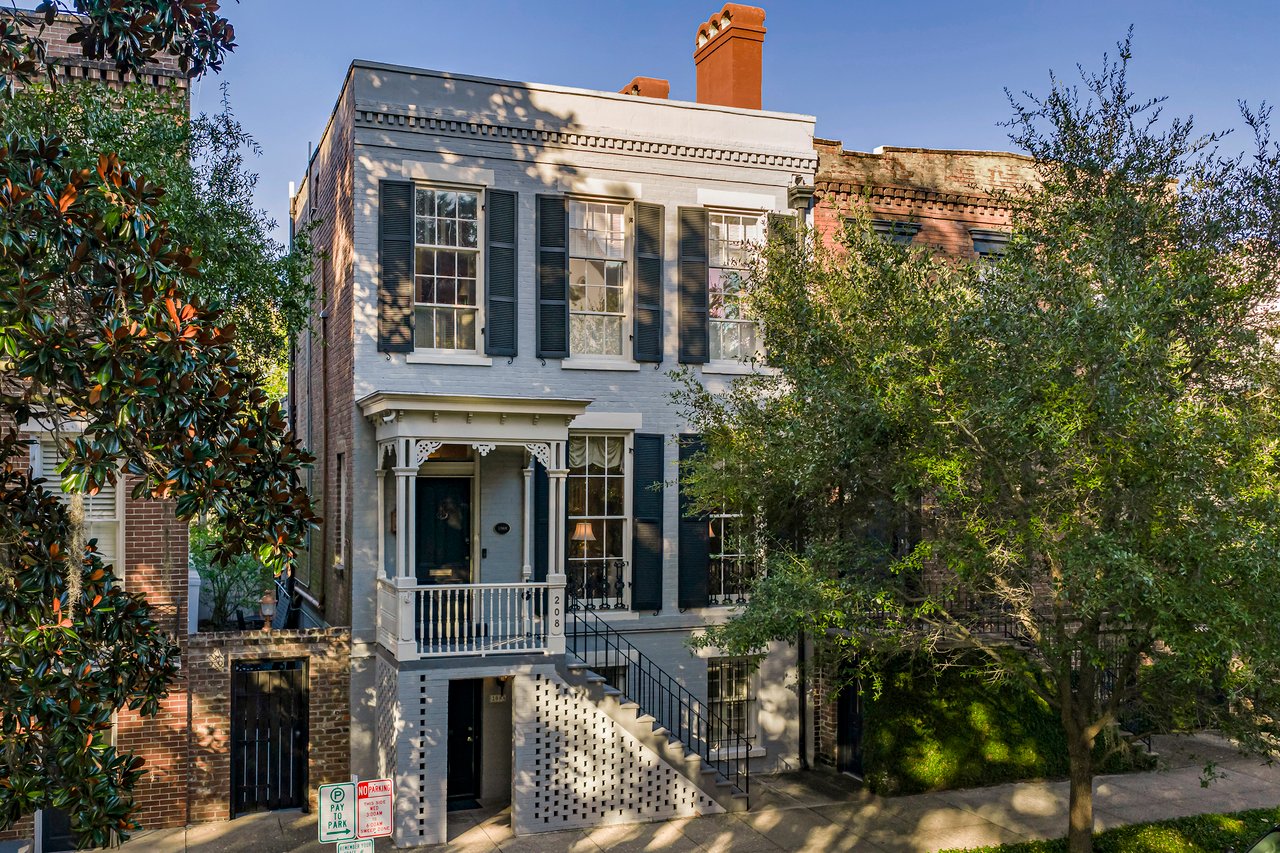
Savannah Historic District Living Without a Car
Relocating to Savannah, Local Guides Liza DiMarco July 23, 2026
Relocating to Savannah, Local Guides Liza DiMarco July 23, 2026
Yes, for many buyers, the Historic District genuinely supports a car-free or car-light lifestyle. Downtown Savannah is a compact, walkable urban core of roughly two square miles, laid out around connected squares, parks, and civic spaces that make short trips feel natural rather than planned. Between walking, a free shuttle, a free ferry, and bike-friendly streets, most day-to-day needs can be met without a car — as long as your routine stays centered downtown.
By Liza DiMarco | July 23, 2026
If your idea of city living includes daily walks under live oaks, coffee and errands within a few blocks, and evenings that don't start with finding parking, Savannah's Historic District deserves a closer look. For many buyers, the question isn't whether the neighborhood is charming — it's whether it can truly support day-to-day life without relying on a car. The answer is often yes, especially if your routine stays centered downtown. Let's dive in.
Savannah's Historic District is compact by design. Tourism and city sources consistently describe downtown as a walkable urban core of roughly two square miles, which helps explain why walking is the default for many residents and visitors.
That small footprint matters in real life. When your neighborhood is laid out around connected squares, parks, shops, and civic spaces, short trips feel natural instead of planned. In the Historic District, many everyday outings can fit into a single walk. (For a closer look at the squares themselves, see our complete guide to Savannah's 22 squares.)
It also helps to think of the district as three connected areas. The North Historic District sits near River Street and the riverfront, the South Historic District offers quieter residential blocks and shaded streets, and the MLK Boulevard corridor connects culture and commerce. That mix gives you different rhythms within the same downtown setting.
A car-free routine works best when the neighborhood feels useful, not just beautiful. In Savannah, public spaces play a big role in that experience, giving you places to walk, meet friends, pause during errands, or simply enjoy time outdoors.
Parks anchor the day. Forsyth Park is one of the strongest examples — the city describes it as a 30-acre public space with the 1858 fountain, monuments, walking paths, courts, and open green space. It's also a genuinely dog-friendly hub if pets are part of your routine (see our guide to Savannah's dog parks and dog-friendly spots).
Ellis Square adds another layer of convenience downtown, including a visitor center, restrooms, seating, an interactive fountain, and performance space — it's part of the district's day-to-day functionality, not just a landmark.
Shops and dining stay close. For food, shopping, and everyday energy, River Street and City Market are key anchors. River Street includes more than 75 boutiques, galleries, artists' studios, restaurants, and pubs, while City Market's four blocks include restaurants, open-air cafes, shops, and artist spaces. For a resident, that concentration means less time getting across town and more time enjoying where you live — a quick dinner, a gift run, or an afternoon coffee can happen on foot, without much planning.
Evenings can stay local. One of the strongest parts of car-free living here is how close arts and entertainment sit to the residential core. The city's buskers program supports live music, street performances, and handmade arts and crafts in the National Landmark Historic District. Nearby cultural stops include Telfair Museums, the Lucas Theatre for the Arts, and the Savannah Theatre — enough to turn a simple evening walk into dinner and a show, or a museum visit and a stroll home.
Even in a very walkable neighborhood, you still need backup options. Savannah's Historic District works best when walking is your first mode of transportation, with transit and bikes helping fill the gaps.
The free DOT shuttle is the most useful non-car option. Run by CAT, it operates on two loops — Forsyth and Downtown — connecting riders to visitor centers, parking facilities, attractions, shops, restaurants, and hotels. CAT says the shuttle arrives every 10 minutes at 18 stops throughout the Historic District and runs seven days a week. For residents, that adds flexibility on hot days, busy weekends, or when you simply don't want to make the full trip on foot.
The Savannah Belles Ferry covers the water transit side of the picture. CAT's free ferry runs across the Savannah River between downtown's Riverwalk and Hutchinson Island, operating from 7 a.m. to 10 p.m. daily with departures every 30 minutes — a practical way to enjoy riverfront access without driving. (If you're the type who'd rather own the boat than take the ferry, our guide to Savannah marinas with fuel docks covers the closest places to dock.)
Bikes can be practical, too. Savannah's flat terrain and warm weather make cycling a realistic choice for many people, and the City of Savannah continues expanding its bicycle network with routes, racks, and cyclist education. Worth knowing before you rely on one: the city prohibits bicycles on some downtown sidewalks and in certain pedestrian spaces, so bikes should be treated as street-level transportation, not sidewalk travel.
Pedicabs and similar options round things out. The city regulates a wide range of for-hire transportation — bicycles, pedicabs, Segways, trolleys, standard vehicles, and horse-drawn carriages — so human-scale transport is genuinely woven into the downtown environment. These tend to be more leisure-oriented than commute-oriented, but they reinforce the larger point: in the Historic District, getting around doesn't always begin with getting into a car.
Car-free living can work well in downtown Savannah, but it's not one-size-fits-all. Your success depends on how closely your work, errands, and social life stay tied to the urban core.
Car-free or car-light living in Savannah's Historic District tends to suit buyers who want a lifestyle built around proximity. If you value being able to step outside and reach parks, dining, the riverfront, and cultural venues on foot, this area offers a rare level of convenience.
It can be especially appealing if you're relocating from another walkable city, searching for a second home with an easy lock-and-leave feel, or simply hoping to simplify your daily routine. The key is matching the neighborhood to your actual habits, not just your idealized version of city life.
For many buyers, that's where local guidance matters most. It's one thing to admire the district on a weekend visit — it's another to understand which blocks, building types, and micro-locations actually support the way you want to live.
Can you live without a car in Savannah's Historic District?
Yes. For many people, the Historic District supports a car-free or car-light lifestyle because it's compact, walkable, and backed by free shuttle and ferry service.
What transportation options exist in downtown Savannah besides driving?
In addition to walking, you can use CAT's free DOT shuttle, the free Savannah Belles Ferry, bicycles on appropriate streets and routes, and certain for-hire options such as pedicabs.
Is Savannah's Historic District good for everyday errands on foot?
Yes. Parks, dining, shops, riverfront destinations, and cultural venues are closely clustered, which makes many daily activities possible without a car.
What are the limits of car-free living in Savannah's Historic District?
The lifestyle works best when your routine is centered downtown. If you need frequent trips across Chatham County, a car-light approach may be more realistic than fully car-free living.
Does weather affect walking in Savannah's Historic District?
Yes. Savannah's warm climate can make hydration and timing important, especially if you plan to walk throughout the day in the hotter months.
If you're exploring a move to Savannah and want a thoughtful read on whether the Historic District actually fits your day-to-day goals — not just how it feels on a weekend visit — that's exactly the kind of conversation worth having before you start touring.
Wondering what to actually look for in an agent for a market like this? What to Look for in a Savannah Historic District Real Estate Specialist breaks it down.
Liza DiMarco | Compass Savannah
About Liza DiMarco Historic District Specialist
Liza DiMarco has worked in real estate since 1998 across four markets — the North Shore of Long Island, Santa Barbara, Santa Monica, and now Savannah — closing over half a billion dollars in transactions for more than 800 clients. She's a Compass agent who opened her own Compass office in the Historic District in 2024, now leading a small team of agents, and she's the Savannah and coastal Georgia Network Partner in The Private Client Network, an invitation-only collective of 300+ top-producing Compass advisors across 80+ luxury markets nationwide.
That network runs both directions: Liza helps clients relocate into Savannah from anywhere in the U.S., and connects Savannah clients moving out with a trusted advisor in their next market.

Navigate the intricacies of real estate negotiations with confidence. Liza's unparalleled negotiation skills have consistently delivered optimal outcomes for her clients. Trust in her ability to secure the best deals, whether you're buying or selling.