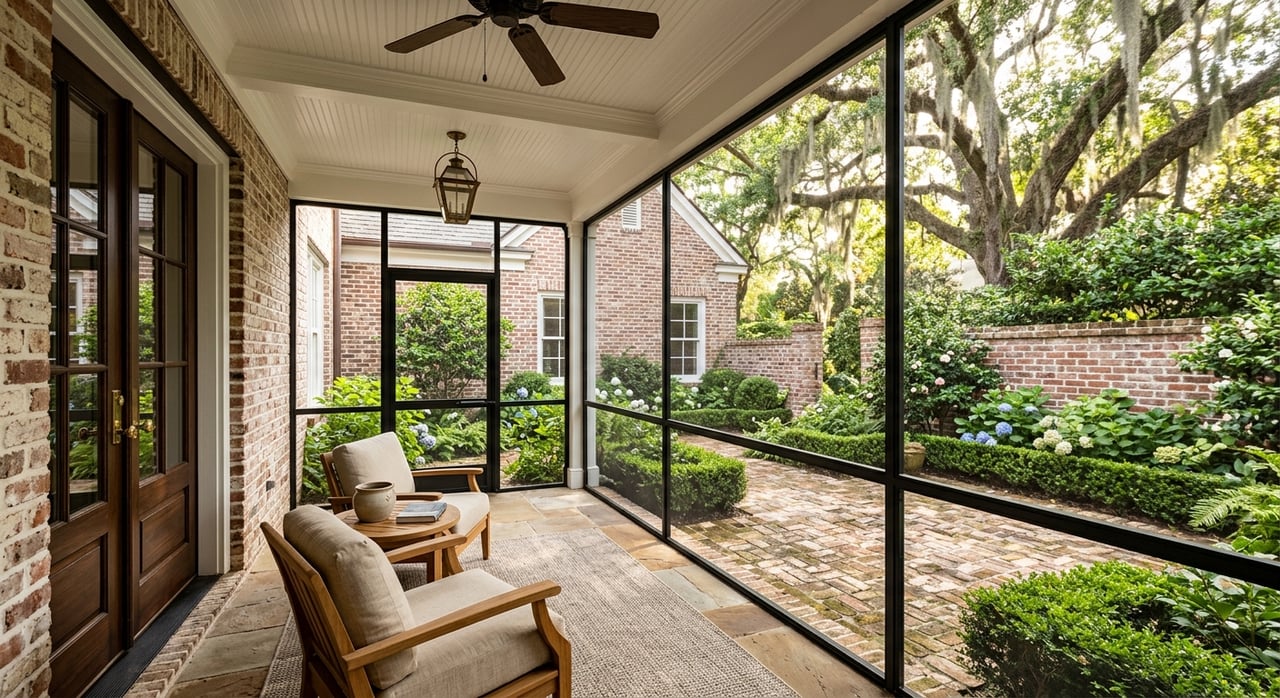
Tybee Island STVR Regulations Luxury Buyers Should Review
May 28, 2026
May 28, 2026
Thinking about a Tybee Island luxury home that could also generate short-term rental income? On Tybee, that potential is not just about the house, the view, or the finish level. It often comes down to zoning, permit status, transfer history, and ongoing compliance. If you are buying with rental flexibility in mind, understanding the rules before you make an offer can protect both your lifestyle goals and your underwriting. Let’s dive in.
For luxury buyers, short-term rental value can shape everything from offer strategy to long-term carrying costs. On Tybee Island, the city defines a short-term rental as lodging rented to transient guests for fewer than 30 consecutive days.
That sounds simple, but the real complexity starts with whether a property can legally operate as an STVR at all. In many cases, the value of a Tybee property is tied not only to the home itself, but also to the legal status and durability of its rental rights.
If you are buying a second home or lifestyle investment, it helps to treat the property like a regulated operating asset. That means reviewing the same details you would want for any income-producing property: zoning, permit history, occupancy limits, tax obligations, and operating requirements.
On Tybee Island, zoning is the gatekeeper for short-term rental eligibility. The city directs buyers to verify zoning through its Planning and Zoning resources and Chatham County tax records, while also noting that GIS maps are informational rather than the legal authority for boundaries or title.
That distinction matters, especially for irregular lots or waterfront parcels. Under Tybee’s code, if a zoning line splits a lot, the whole parcel is treated as the least intense zoning classification. For luxury coastal properties with unusual parcel shapes, that can materially affect whether short-term rental use is allowed.
Tybee’s current code says no residence, structure, or building in R-1, R-1-B, or R-2 may operate as an STVR except where specifically allowed. The city’s FAQ also states that no new STVR certificates will be issued in those districts, except for a narrow exception tied to certain homes with building permits issued before August 26, 2021.
For buyers, this means you should not assume a home can become a vacation rental simply because other homes nearby appear to rent short term. The legal test is the parcel’s zoning status and permit eligibility, not the surrounding area’s reputation or rental activity.
Tybee’s 2023 amendments changed the status of existing permitted STVRs in R-1, R-1-B, and R-2. Those properties became nonconforming uses rather than freely renewable rights that run with the property in the usual sense.
That creates a different risk profile for buyers. A nonconforming STVR may have value today, but that value can be fragile if the permit cannot survive transfer or renewal requirements are not met.
One of the most important issues for luxury buyers is whether a permit survives a sale. In Tybee’s residential districts, the code says an STVR permit terminates on transfer of the property and cannot be assigned, transferred, renewed, or replaced in that circumstance.
This is where due diligence becomes essential. The city’s 2025 application asks whether any sale, conveyance, or ownership-interest transfer occurred in an R-1, R-1-B, or R-2 property since June 14, 2024, and it defines transfer broadly, including some entity-interest changes.
Buyers sometimes assume ownership held in an LLC creates flexibility. Tybee’s application language suggests that certain ownership-interest changes may still count as a transfer, subject to a limited exception for internal reshuffling among existing owners.
For higher-value acquisitions, that means you should look beyond the listing description and confirm exactly how title is held, whether ownership has changed, and whether any transfer event could affect permit status. This is especially important when you are evaluating a property based on projected rental income.
Even if a property has operated as an STVR, renewal is not automatic in every case. For existing nonconforming STVRs in R-1, R-1-B, and R-2, the city requires proof of at least 60 days of rental activity within the prior 12 months.
If that proof cannot be provided, the use is presumed abandoned, becomes unauthorized, and is not eligible for renewal. The owner bears the burden of proof, typically through tax returns or other verifiable records.
If you are under contract on a luxury home with claimed STVR status, request the operating file early. That should include permit records, renewal history, tax filings, and evidence of rental activity.
A new owner may also need to show the prior owner’s rental history. So if the seller cannot produce clear records, the rental value attached to the property may be less secure than it appears.
Tybee’s FAQ notes a few narrow exceptions. A homesteaded property continuously owned for at least five years may apply for a three-year STVR permit, and a deceased owner’s estate may have a one-time opportunity within one year of death to apply for a three-year permit.
These are highly specific situations, not broad workarounds. If a property’s value depends on one of these exceptions, you will want that reviewed carefully before you rely on it in your purchase decision.
For luxury buyers, compliance is not just a legal issue. It also affects how smoothly a property can be managed, how guests are handled, and how much operational friction you may face after closing.
Tybee requires an owner to designate a local agent for every STVR. The local contact must be available at all times to respond to complaints, and the application says issues should be addressed within one hour.
If you live out of market, this requirement deserves close attention. A beautifully renovated coastal home may still be a poor fit as a self-managed rental if you do not have dependable local coverage.
That makes local agent availability part of your underwriting, not just a post-closing detail. Remote buyers should account for management logistics from the start.
Tybee ties occupancy to the permit. Maximum occupancy is two adults per bedroom plus two additional adults, and the bedroom count should match tax records.
The application also requires a parking plan that shows the number and orientation of spaces. For larger homes, this matters because guest capacity may be limited not only by layout, but also by how the property is officially documented and parked.
Tybee’s signage rule is specific. One- and two-family STVRs need a visible street-facing sign with emergency contact details, and the city sets the acceptable size range for that sign.
The application also requires renters to receive the noise ordinance, beach rules, occupancy limits, parking plan, trash policies, disorderly house ordinance, and good-neighbor policy. For luxury owners, this is part of protecting the asset and maintaining compliant operations.
If you are comparing Tybee properties based on potential income, be sure your numbers reflect the city’s operating costs. Tybee requires a 7% local occupational room tax, due by the 20th day of the following month.
The city also requires monthly returns even when no tax is due or when a third-party platform remits tax on the owner’s behalf. That means compliance continues even during slower periods or when a platform handles collection.
The STVR permit fee includes a $200 base fee plus occupancy-based tiers of $10, $15, or $20 per person, depending on total occupancy. The annual fee is due January 1.
If it is not paid within 90 days, the city can apply delinquency penalties and revoke STVR rights until the issue is cured. In practical terms, permit administration is not optional bookkeeping. It is part of preserving the property’s use value.
On Tybee Island, the safest approach is to verify each moving part before you finalize your purchase. For many luxury buyers, the difference between a strong acquisition and a costly surprise is in the paperwork.
Here is a practical framework to use:
At the upper end of the market, buyers often pay for design, location, privacy, and waterfront appeal. But when short-term rental income is part of the decision, legal operating status can have just as much impact on value as the home’s physical features.
That is especially true on Tybee, where new STVR issuance is sharply limited in certain residential districts. A polished property presentation may capture attention, but a careful regulatory review is what protects your downside.
If you are buying a Tybee Island luxury property for personal use with optional rental upside, do not treat STVR rights as a casual bonus. On this island, rental potential is highly regulated and often property-specific.
The right home can still be an exceptional fit for your goals, but only if the zoning, permit status, transfer history, and operating requirements all support the use you intend. Clear due diligence gives you the confidence to move forward with your eyes open and your numbers grounded in reality.
When you want a polished, detail-driven buying experience on Tybee Island and the greater Savannah coast, Liza DiMarco offers the local insight and concierge-level guidance that luxury purchases demand.


Navigate the intricacies of real estate negotiations with confidence. Liza's unparalleled negotiation skills have consistently delivered optimal outcomes for her clients. Trust in her ability to secure the best deals, whether you're buying or selling.