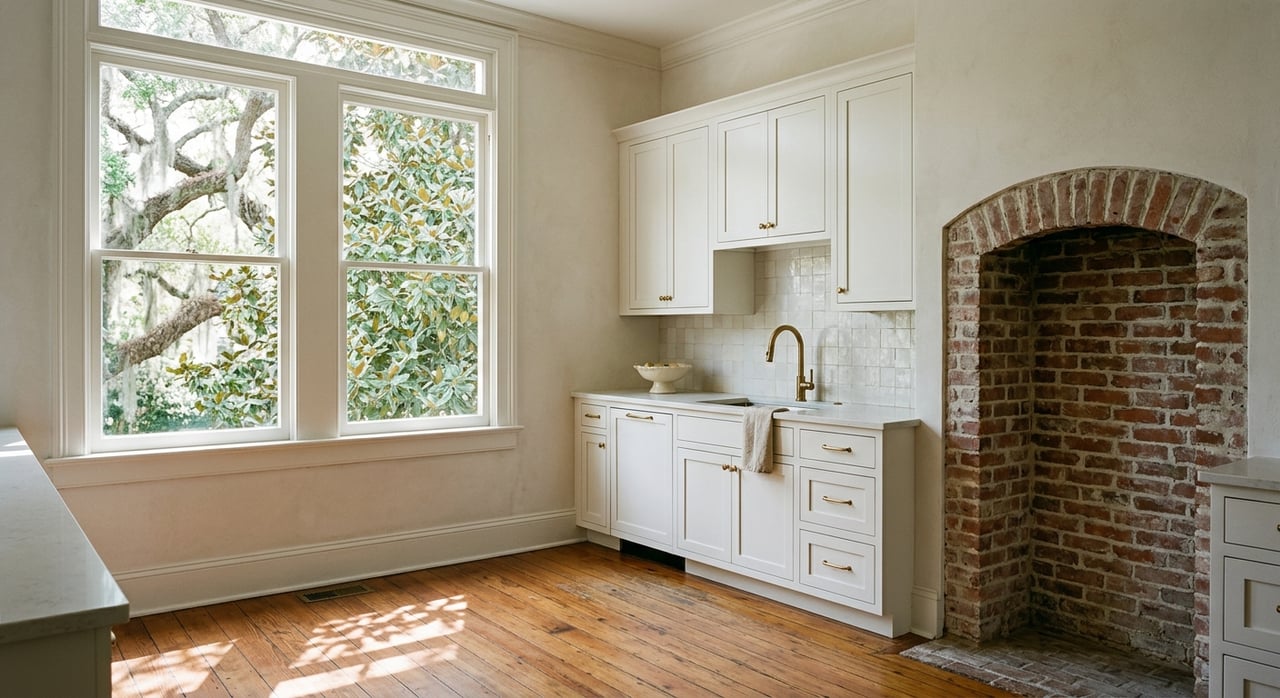
Thomas Square Historic Renovation Tips Before You Start
April 2, 2026
April 2, 2026
Thinking about renovating in Thomas Square? Before you choose finishes or call a contractor, it helps to know that many homes here sit within Savannah’s Streetcar Historic District, where exterior changes often require a formal review before work begins. If you want to protect your budget, timeline, and the character of your property, understanding the rules upfront can save you real stress later. Let’s dive in.
Thomas Square sits inside Savannah’s Streetcar Historic District, a local historic district with a large collection of late-19th- and early-20th-century buildings. According to the Metropolitan Planning Commission’s district overview, the area includes roughly 1,100 historic buildings and a wide range of architectural styles.
That historic status matters when you renovate. In this district, preservation review is not just a suggestion. The Historic Preservation Commission and preservation staff review many exterior changes, major projects, demolitions, and new construction, especially when work affects the appearance from the public right-of-way.
Before work begins, assume your project may need city review if it changes the exterior appearance of the home. That is especially true for visible alterations, material changes, additions, accessory structures, and demolition-related work.
A Certificate of Appropriateness, often called a COA, is required for many exterior changes visible from the public right-of-way in Savannah’s local historic districts. The MPC’s historic preservation resources explain the application process, review path, and district-specific guidance.
If you skip this step, you can create delays, redesign costs, or permit issues later. For Thomas Square homeowners, it is smart to confirm the review path early, before ordering materials or finalizing plans.
A preservation approval does not replace a city permit. Savannah still requires a building permit for many types of construction, alteration, repair, moving, removal, or demolition work.
The city’s eTRAC system can help you track permit activity, and Savannah also offers Building Plan Review meetings and permit resources. If your project has multiple moving parts, using those tools early can help you avoid preventable hold-ups.
In Thomas Square, design standards are meant to protect the visual character of contributing historic structures. That means your renovation choices may be shaped by more than style or cost alone.
District standards call for retaining important exterior features such as window casings, porch columns, handrails, scroll brackets, and corner boards. The standards also say that existing brick or stone pier foundations should be repaired or rebuilt rather than casually removed or replaced with incompatible materials.
For many owners, this changes the renovation mindset. The goal is often thoughtful repair and compatible replacement, not stripping away original features for convenience.
The district standards place limits on several exterior materials and design elements on contributing structures. For example, vinyl siding is prohibited, and there are added limits on items like exposed concrete block, some corrugated metal uses, large picture windows, and unscreened street-facing roof elements, as outlined in the district ordinance standards.
Alternative materials may still be considered if they are visually compatible and perform well in the local climate. That is another reason to confirm acceptability before you buy.
If you are planning an addition, carriage-house-style structure, garage, or carport, placement and visual scale matter. The standards say accessory structures should generally go to the rear of the lot and should not dominate the main house.
New construction and additions are reviewed for compatibility based on factors like height, width, setbacks, roof shape, materials, openings, and projections. In short, even well-designed projects need to fit the streetscape.
Many Thomas Square homes are older, and older homes often hide the most expensive issues behind walls, under floors, and around foundations. In coastal Georgia, moisture and pests are especially important to evaluate early.
The University of Georgia Extension notes that regular maintenance helps prevent moisture problems, pest issues, and structural damage in older housing. Its Healthy Housing guidance also highlights common concerns such as lead, asbestos, and indoor contaminants in older homes.
That makes water management one of the first things to investigate. Roof leaks, poor drainage, damp crawlspaces, and failed porch detailing can all lead to deeper and more expensive repair needs.
UGA Extension also warns that subterranean and drywood termites are important risks in the Southeast. Key inspection areas include foundations, crawlspaces, concrete-to-wood junctions, raised porches, slab penetrations, and attic beams.
In a neighborhood like Thomas Square, termite damage can affect both structure and historic fabric. If you are budgeting for a renovation, build in room for inspection and repair in those areas before focusing on finishes.
Beyond structural concerns, older homes can come with environmental issues that affect renovation scope. Lead, asbestos, and other indoor contaminants may need professional evaluation depending on the age of the home and the type of work planned.
This is one reason renovation budgets in historic neighborhoods should include contingency funds. The visible work is not always the cost driver.
If your property sits in the 100-year floodplain or a mapped coastal flood area, flood rules can directly affect renovation design and cost. Savannah asks applicants to review local flood studies and FEMA FIRMs as part of planning.
The city’s flood protection guidance notes that as of January 1, 2025, the flood ordinance uses a two-foot freeboard above base flood elevation for new and substantially improved structures in the 100-year floodplain. If your project may qualify as a substantial improvement, that is worth clarifying early.
In Thomas Square, the most financially sensible renovation plan is often not the biggest one. Historic rules, older-house conditions, and tax-credit definitions can all make repair-heavy projects more attractive than large expansions.
Georgia offers an important tax credit for certified rehabilitation of a historic home. The Georgia Department of Revenue says the credit is available for tax years 2023 through 2029, and the Georgia Department of Community Affairs guidance notes that it equals 25% of qualifying rehabilitation expenses, capped at $100,000 for a principal residence.
There is also a preferential property tax assessment program tied to qualifying rehabilitation. For homeowners planning substantial work, these incentives can materially affect the budget.
There is an important catch. Georgia’s rules state that qualified rehabilitation expenses do not include new additions or new construction adjacent to or related to the certified structure, according to the state rule guidance.
That means preserving and rehabilitating the existing structure may offer better financial efficiency than adding square footage. If you are weighing options, this is a key factor to consider before you commit to a larger design.
The federal 20% rehabilitation credit is narrower than many homeowners expect. The Georgia DCA’s federal incentive guidance explains that it is for income-producing properties, requires National Park Service certification, and does not apply to a private residence.
For owner-occupants in Thomas Square, the Georgia state historic-home credit is usually the more relevant place to start.
One of the best ways to protect your investment is to renovate in sequence. In older historic homes, cosmetic work should usually come last, not first.
A practical order often looks like this:
This approach lines up with the common risk areas identified by UGA Extension, the district’s preservation standards, and the realities of flood and moisture exposure in coastal Georgia. It is rarely glamorous, but it is usually the smartest path.
If resale value matters, bigger is not always better. National data from Zonda’s 2024 Cost vs Value report shows stronger cost recovery in many curb-appeal and contained-update projects than in major overhauls.
For a Thomas Square property, that often supports a practical strategy: stabilize the house, preserve original features, improve porch or entry presentation, and make selective interior updates rather than relying on a large addition as the main value driver. In a historic neighborhood, thoughtful stewardship and compatibility often matter as much as raw square footage.
Even if you plan to stay for years, it helps to think ahead. Buyers in Savannah’s historic neighborhoods often notice original millwork, porch details, windows, foundation integrity, and whether updates feel consistent with the age and style of the home.
Well-planned renovations tend to do two things at once: they improve how you live in the house now, and they protect market appeal later. In a neighborhood like Thomas Square, that balance matters.
If you are weighing whether to renovate before selling, or trying to decide which improvements are worth making, a local strategy can save time and money. Liza DiMarco helps clients evaluate historic-property decisions with an eye toward presentation, timing, and long-term value.
Buyer Resources, Investment Real Estate
What investors actually need to know before buying a Savannah property to rent short-term
Relocating to Savannah
Best $1M+ Savannah neighborhoods near the Historic District for NYC, Boston, Chicago, and DC buyers relocating south — Ardsley Park, Isle of Hope, and more.
Relocating to Savannah, Local Guides
What daily life without a car actually looks like in downtown Savannah — parks, transit, biking rules, and who it suits best

Lifestyle, Local Guides
Where Savannah's serious golfers actually hold a membership, from an 18th-century club to a six-course Skidaway Island community

Local Guides, Savannah Lifestyle, Historic District, Waterfront Living
A walking guide to Savannah's 22 historic squares, complete with history, landmarks, and cross streets in the Historic District"

Lifestyle, Local Guides
Where to buy local produce, meat, and baked goods near downtown Savannah — plus a brand-new sunset market on the river
Relocating to Savannah
A month-by-month moving checklist for relocating to Savannah, from your first scouting trip to settling in
Luxury Real Estate , Relocating to Savannah, New Construction, Local Guides
Savannah's only new-construction riverfront neighborhood in the Historic District — Upper East River homes from $1M to $5M+

Waterfront Living, Local Guides, Savannah Lifestyle, Boating & Marinas
Where to dock, fuel up, and step straight into River Street's cobblestone streets.
Navigate the intricacies of real estate negotiations with confidence. Liza's unparalleled negotiation skills have consistently delivered optimal outcomes for her clients. Trust in her ability to secure the best deals, whether you're buying or selling.